Saturday, October 28, 2006

Launching of Hiwot (Life) Campaign

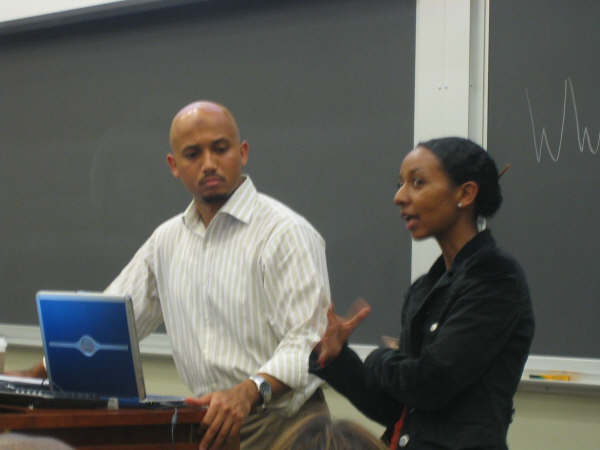
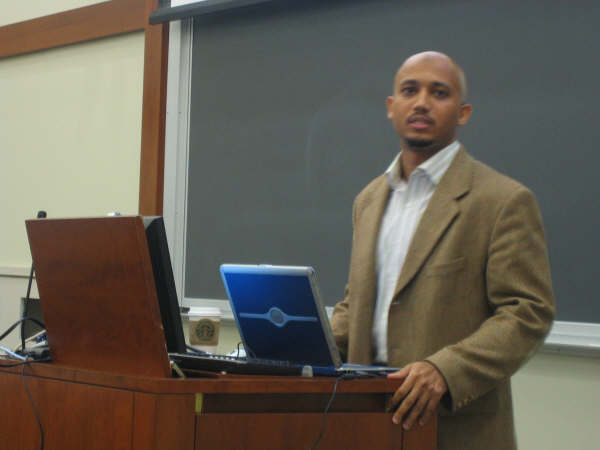
I want to thank you all for attending the launching the Hiwot (Life) Campaign on Friday, October 27th, as the Hiwot Campaign is one stage in a vision I have to create change in the lives of orphans and vulnerable children in Ethiopia. The essence of this vision is to alter the lives of children who have brought clarity to my life.

Through the Hiwot Campaign, Alif aims to send 50 orphans and vulnerable children to school next year. However, in addition to giving these 50 children the opportunity to obtain an education, the Hiwot Campaign’s dual impact, both an immediate and long-term effect on the lives of children and Ethiopia, is the vital component of the campaign.

This initiative provides poor family’s the ability to secure food, shelter and other basic necessities, which address the immediate impact of poverty. The long-term effect of the Hiwot Campaign, is seen in affording a child an education, which enhances a child’s and Ethiopia’s human capital, thus aiding in breaking the generational cycle/transmission of poverty.

Join the Hiwot Campaign and let’s change lives by investing in a child’s education and future!

I thank you again for attending and your interest in the Hiwot Campaign,
Nasir

Click here to join the Hiwot Campaign!

Sunday, October 22, 2006

ETHIOPIA: Nearly half of the children orphaned by HIV/AIDS

Via: PLUSNEWS
Ethiopia has one of the largest populations of orphans in the world with nearly half of the children having lost at least one of their parents. A government official said on Tuesday that HIV/AIDS, disease, hunger and poverty threatened to drive the number of orphaned children from 11 percent to 43 percent of the 45 million children in Ethiopia by 2010.

This could mean some 19 million children will have lost one or both of their parents, according to the figures, said Bulti Gutema, the head of the government's taskforce on the problem of orphans and vulnerable children. He said the figures were based on projections by the health ministry.

Bulti said antiretroviral drugs are vital in curbing the explosion but less than five percent got the drugs. Cheap antibiotics costing less than US $0.03 cents could also cut the numbers of child deaths from HIV/AIDS in the country by half but less than one per cent of the children got them, he added."This is a huge problem," he said at the launch of a new initiative to highlight the problem and bridge the massive funding gap that exists.

The UN Children's Fund (UNICEF) estimate that looking after each orphaned child in Ethiopia would cost around $300 a year, totalling some $1.38 billion. But the organisation has less than $10 million available even though Ethiopia has one of the largest populations of orphans in the world. Some 300,000 children already live on the streets, according to the UN body.Bjorn Ljungqvist, head of UNICEF Ethiopia said the scale of the crisis was daunting.

"It is easy to stand and look at the problem from a distance and wring our hands at how big and impossible the problem is," he said. "But we must confront this."

The warning came as UNICEF launched a global campaign focusing on the enormous impact of HIV/AIDS on children. Worldwide, fewer than five percent of HIV-positive children receive treatment and millions of children who have lost parents to the disease go without support. There are currently 4.6 million orphans in Ethiopia - with around 540,000 of them having been orphaned by the HIV/AIDS pandemic.

ETHIOPIA: Poverty forcing girls into risky sex work

Via: IRIN
The nightclubs of the Ethiopian capital, Addis Ababa, reveal a thriving sex industry, in which thousands of skimpily dressed young women trade sexual favours for cash to survive, putting them at risk of contracting HIV and spreading the disease.

Extreme poverty has forced many girls into the sex trade. Helen Chane (not her real name), a grade 10 student aged 17, became a commercial sex worker after her parents died from AIDS-related illnesses about a year ago.

"I support my grandmother and sister; I sleep with students during the day and I have customers that I find through brokers at night," she said. "I do not need to go to the street, the brokers bring them to me."

Sex work in Addis is usually linked to establishments such as restaurants, bars, hotels and nightclubs frequented by wealthy expatriates or local businessmen, but the city also has residential houses that function as unlicensed brothels.

According to a 2002 census in Addis by the American healthcare agency, Family Health International (FHI), 8,134 establishment-based sex workers were identified in the capital, 60 percent of whom were aged between 15 and 24. Clients are increasingly targeting high school students, domestic workers and even children - the perception is that these groups are less likely to have the HI virus than those openly selling sex.

Click here to read the entire article!

Tuesday, October 10, 2006

An Overview of Adolesence in Ethiopia

ADOLESENCE
Via: Unicef
Adolescence is a critical stage of development, a transition from childhood to adult, a period marked by physical, emotional and social changes. Ethiopian face the challenges of adolescence.

• An estimated 2.3 million Ethiopians are infected with HIV and close to 1.2 million are HIV/AIDS orphans

• Poverty, about 82 per cent of the population survives on less than 1dollar a day.

• Harmful traditional practices (HTPs). Abduction and early marriage are widely practiced in most parts of rural Ethiopia. Female genital mutilation (FGM) contributes to the spread of HIV/AIDS.

• Nearly 4.9 million adolescents aged 15-18, of which 2.4 million are girls, are not enrolled in school due to various economic and social reasons

• For the entire working population, unemployment rates are highest in the 15-19 age groups. For all age groups, females constitute the majority of the unemployed. The high level of unemployment has serious implications for the types of lifestyle choices made by adolescence, increasing the risk of alcohol and drug abuse, unwanted pregnancy, multiple sexual partners, and HIV infections.

• There are between 150,000–200,000 street children nationally, with a further one million vulnerable or at risk of ending up on the streets. Girls who work and live in the streets face sexual abuse by adults, rape, unwanted pregnancy and early motherhood – sometimes as young as 12. These girls are likely to join the rank of child prostitutes or street mothers and continue the vicious circle of street life. Inevitably they are highly at risk of being infected with HIV/AIDS. It is estimated that there are 10,000 street mothers in Addis Ababa.

OVERVIEW OF PRIMARY SCHOOL YEARS--ETHIOPIA

The Primary School Years
via: Unicef

The primary school age population is estimated to be almost 14 million in 2002/2003 which is about one fifth of the total population. About 36.6 per cent of the school age population is not enrolled in primary schools.

Primary school years in Ethiopia are characterised by:
• Low enrollment and attendance; high repetition and drop outs
o Though primary schooling in Ethiopia is free for the average Ethiopian living below one dollar a day it is difficult to cover their families’ school expenses like uniforms, exercise books and school maintenance cost
o Families may be reluctant to send their children to school, since they depend on their children’s labour for survival. Family do not understand the value of sending their children to school.
o About 72 per cent of school-age children have no access to formal education.
o The net primary enrollment ratio at the national level was 54 per cent in 2002/2003 with an average growth rate of 11.3 per cent over the last 5 years. The net enrollment ratio is 47.2 per cent for girls and 60.6 per cent for girls. Net primary attendance is even lower.

• Disparities
o More than 60 per cent of primary school children did not have the chance to continue to grade 5. Girls’ repetition and drop out rates are higher than boys.
o Girls’ participation is lower than boys for all regions except the capital city Addis Ababa. Nationally the female and male enrollment in 2002/2003 is 0.7.

• Resources and facilities
o Nationally, only 3 per cent of Ethiopia’s schools have clinics serving students. About 75 per cent of the population suffer from some form of communicable disease.
o Primary school children have to walk long distances and through difficult terrain to attend school often in crowded classroom, inadequate trained teachers, school materials. Without proper sanitation, in four out of 10 children will not reach their full educational potential.
o Play grounds are basically nonexistent in Ethiopia, though play have a significant role in the primary years of life and helps children develop socially, emotionally and intellectually.
o A demographic and Health Survey conducted in 2000 found that 55 per cent of Ethiopian children under the age of five are stunted due to malnutrition.

Sunday, October 08, 2006

Inner Agitation: An Alarm is the Precursor to Awakening

Inner Agitation: An Alarm is the Precursor to Awakening
by: Nasir Al-Amin

Internally there is something unnerving about the plight of orphans and vulnerable children in Ethiopia. Their reality is one of exploitation, abuse and violence. “I refuse to call it a life,” 17 year old Fronyi of Ethiopia asserts, after recounting how she turned to prostitution in order to survive. However, Fronyi’s account is a composite of the 1.2 million children who are victims of sexual exploitation annually.

Often people ask me “how did you get involved in this” or “Why Ethiopia.” Although I never completely answer the question, due to time and complexity, one of the many reasons and/or answers to “How” and Why Ethiopia” is this inner agitation that accompanies my thoughts and reflections about the condition of women and children I have met during my travels to Ethiopia. It appears/feels like this inner agitation has enhanced over the years—the more I travel to Ethiopia, learn about orphans and vulnerable children, and actually develop relationships with them the more unnerving this agitation becomes.

I’m convinced that this inner agitation is what gives sound to the inner voice in all of us who have witnesses something in our lives that is unsettling. Through a defeatist mentality (“Oh this is just how things are”, “I’m only one person, what can I do,” “The government…”) and conspicuous consumption (efforts to amass material items for vain reasons only to distract the mind and spirit from an uncomforting reality) we try to silence that voice, yet it is this voice that is the precursor to an inner awakening.

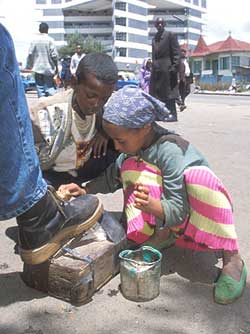
For me that inner agitation and voice awakened this sense that what I’m witnessing in Ethiopia is unacceptable. And that realization is at the heart of why I established Alif (Alliance Investment Fund) and is the impetus to continue this work. As the awakening was not through engaging concepts, theories, or reading annual reports rather it came via interactions with orphans and vulnerable children, through taking the time to not only give them a birr (Ethiopian currency) but also taking the time to ask them about their life: What stops you from attending school? What lead you to prostitution as a teenager? Are your parents alive? Who cares for you? What do you want to be when you grow up? Engaging people, developing relationships is not just giving someone money because he or she is begging. I know an Ethiopian guy that when he went back to Ethiopia, he would look for this shoeshine boy that he developed a rapport with, so daily he would go to the street where he works and sit and talk to him. That shows concern, and gives the voiceless a voice.

So it is the inner voice that serves as an alarm, letting one know that the plight of orphans and vulnerable children in Ethiopia is unacceptable and that one should make a concerted effort to affect change. If its just one child that you send to school, then that’s commendable as we never know where the path of education would lead that child or the number of lives that child will affect in the future, or if you organize a group of family members, collogues, and friends to contribute to the construction of a school in Ethiopia or securing the school uniforms and supplies for 10 or 20 children. The crux is to stop silencing the alarm, the inner voice, as the wretched plight of orphans and vulnerable children in Ethiopia need you to listen.

Friday, October 06, 2006

Civic Action Forum (CAF)

Alif’s Civic Action Forum (CAF)
CAF is an action-orientated initiative that convenes monthly with the aim to move beyond mere dialogue and debate and into the development of tangible interventions to address critical issues faced by Ethiopia’s underserved and marginalized populations.

CAF will convene on or within the area of Columbia University, however time and location will be updated on the Alif site: (www.allianceinvestment.org).


We look forward to seeing you at CAF meetings!

Tuesday, October 03, 2006

DOCUMENTARY: "AFRICA OPEN FOR BUSINESS"

The SIPA Pan-African Network of Columbia University,
WNET, and The Africa-America Institute
Present

A DOCUMENTARY SCREENING AND PANEL DISCUSSION
"AFRICA OPEN FOR BUSINESS"

Ten stories, one continent, a global world.
Get ready to see Africa as you’ve never seen it before
Thursday October 12th, 2006
6pm – 8pm
Venue: Columbia University, Roone Arledge Auditorium
1st Floor Lerner Hall (2920 Broadway, New York, NY 10027)
RSVP by October 5th: http://sipa.columbia.edu/students/span/
Co-sponsored by The Africa Program at SIPA, Africana Association (Columbia Business School)
"Africa Open for Business" is the award-winning film that is changing people’s
perceptions on Africa. Carol Pineau, the producer of this groundbreaking film
that screened at the World Economic Forum and Cannes Film Festival, will talk
about a new vision for Africa. The film will be followed by a panel discussion with
leading experts, including investors who have literally made millions in African
stock exchanges, regularly topping the list of the world's fastest growing markets.

Sunday, October 01, 2006

The Blueprint

THE BLUEPRINT—How to move beyond Rhetoric, and Passionate but Impotent Discourse about the Government and move to Tangible Solutions
By: Nasir Al-Amin

Typically, the Christmas Season and New Years creates a wave of Ethiopians from the diaspora traveling back to Ethiopia for the festive seasons. In most cases, those who journey back to Ethiopia allocate their time in two ways. The first way, is the initial few days and/or week are allocated to visiting various family members. The second way/or second segment of their time is allocated to clubbing everyday into the AM and then sleeping until 12 or 1 PM. As well as making week/weekend excursions to So-daray and Lunganew. However, traveling back to Ethiopia is bigger than that, it’s bigger than Bole, the nightlife, and weekend excursions to So-daray and Lunganew, thus I’m writing to offer a third and/or an alternative to the latter allocation of time spent in Ethiopia. It is an alternative that is life altering, and engenders clarity to ones purpose in life.

Therefore, this alternative I call the Blueprint. And the Blueprint is a commitment that your trip to Ethiopia will be one of purpose one that will touch the lives of others. This is done by making site visits to various Non-Governmental Organizations (NGO) in Ethiopia who are providing services to poor women and children, people infected or affected by HIV/AIDS, shelters/drop in-centers for street children, alternative/non-formal education programs, and interventions for orphans.

There are numerous benefits to taking on this commitment. One, it would raise your personal awareness about the plight of vulnerable populations in Ethiopia as well as the services being afforded them. Two, you would be able to come back to your community, college/university, ESA, or place of employment equipped to speak with confidence and insight about the realties on the ground in Ethiopia, as well as arrange awareness and fundraising events for NGOs that you previously visited—it would be a trickle down effect, as those close to you would trust that if you are willing to spend your time and contribute financially to a particular NGO then they should as well. Third, those who are interested in education could visit schools in Ethiopia and return with interviews you conducted with the teachers and students that would serve as a stimulus for establishing a BACK TO SCHOOL campaign that would serve to raise awareness as well as secure vital supplies for children in Ethiopia: backpacks, school uniforms and supplies. Fourth, and maybe arguably the most important, it would show the marginalized and impoverished women and children that Ethiopians of the diaspora care—I know some like to think that every Ethiopian in Ethiopia knows that their brothers and sisters abroad care about their well being, but that’s a fallacy, I have spoken with some of the underserved women and children and they feel forgotten by their brothers and sister in the diaspora. *(I know that statement and the following will engender a bit of hate mail but I’m fine with that.) Furthermore, I’m not referring to that emotional feeling of care and concern, I’m talking about the tangible care and concern that moves one beyond rhetoric and into action, as impotent café rhetoric doesn’t get the little girl who dropped out of school due to a lack of funds for a school uniform and supplies back in school, nor does it afford the mother of the shoeshine boy enough money to feed herself and his siblings.

So here are the logistics of the Blueprint: I have attached a document (click on the title or the link below) that details the NGOs working in Ethiopia and on the side panel of this blog under the section Ethiopian NGOs click on the link: Index of NGOs working. Today, is October 1st, for one month you could search the two sites and look at the work and populations served (orphans, HIV/AIDS infected and/or affected women and children, street children…etc) by the various NGOs and in November contact the NGOs via phone and/or e-mail. During the contact all you have to mention is the following: I’m an Ethiopian living in __________ I plan to visit Ethiopia during the month of December. I want to learn more about the work you do can I visit your location?

It’s that simple! I know some of you are saying the problems faced by Ethiopia are bigger than that and are not that simple. A note to you:
“Though primary schooling in Ethiopia is free, for the average Ethiopian living below one dollar a day it is difficult to cover their families’ school expense like uniforms, exercise books and school maintenance cost.”
“Nearly 4.9 million adolescents aged 15-18, of which 2.4 million are girls, are not enrolled in school due to various economic and social reasons.”
“More than 60 percent of primary school children did not have the chance to continue to grade 5.”
“The largest single reason for non-attendance (69%) was that parents could not afford school fees. A lack of school materials, the second biggest reason (29%), was related; families simply couldn’t afford to by basic supplies such as uniforms, books, pens and papers.”
So sometimes the solutions are very simple!

Back to the Blueprint, I know its that simple because I did it and each NGO that I contacted was excited to have me visit and learn more about the plight of those they serviced and ways in which I could help. However, it is critical that before you depart, set tentative dates with each NGO that you plan to visit as the allure of Addis’s nightlife can only be combated with a detailed To Do List of things you must accomplish while in Addis.

An estimated 82% of Ethiopia’s population survives on less than 1 dollar a day. If you follow the Blueprint you will come in contact with this segment of the population and your life will be changed. The blinders will be removed and your reality and discourse about Ethiopia will have been altered. At that point, your words will move beyond impotent rhetoric and will be able to empower those around you and affect change in the lives of Ethiopia’s most vulnerable.

This piece was inspired by someone who has shared with me her commitment to make her next venture to Ethiopia one of purpose. I know that there are a number of you who make this commitment each time you return to Ethiopia, however this was written for those of you who don’t make the commitment or those of you who are questioning how to do what internally you feel compelled to do. Make your next trip to Ethiopia one of purpose and meaning!

Nasir Al-Amin

Click here for link to NGOs!

Poverty hits hard on Ethiopia`s vulnerable kids

The following are excerpts from an article on orphans and vulenrable children (ovc) in Ethiopia. It is an insightful article as it has a case story from one child engaged in child labor as well as research findings.

POVERTY HITS HARD ON ETHIOPIA'S VULNERABLE KIDS
VIA: AngolaPress
Their personal accounts of survival in poverty are emotionally gripping and profoundly disgusting...Many of them are orphans, but in their ranks too are those who have been abandoned by parents or close relatives after being intentionally subjected to cruelty, including maiming. Others simply find the streets as the only haven where they can strike up friendship that actually gives them the strength to survive as they forage for food. "I don`t want to go back home. My parents are very poor. I know they are enduring hardship." They have three other children and there is nothing they can do for me," said 12-year-old Gutama Zombiye.

Gutama was brought to the city by his uncle on a false promise to find him a good school. "When I arrived here I had the impression of starting a new life," he recalled. But soon he was thrown into a terrible confusion, as he had to come to terms with the deception of his uncle. To his disappointment, Gutama ended up being one of the uncle`s child- labourers in a backyard shawl-weaving factory located at Shoromeda in the city. For one year, he was paid two birr as his daily wages to buy himself meals. He slept rough and the uncle never talked again about his school promise. Colourful, traditional shawls made by the child-labourers sell for 17 up to 30 birr apiece ($1 is equivalent to 8.67 birr) and they have become part and parcel of the nation`s cultural image.However, tourists and other foreign visitors flocking to Shoromeda market to buy traditional Ethiopian dresses as souvenirs pay no attention to the plight of children forced to work on shawl looms.

Like Gutama, these children lead a horrible life in shacks behind the shops, where they toil to fill the pockets of their callous masters. Besides starvation, they are exposed to confinement, physical violence and overwork.

"Thousands of young girls and boys from destitute families in rural Ethiopia are taken to the cities every year just like commodities," explained Sammo Sima of FSCE."They are trafficked by brokers who make deals with bar owners, `baluka` (brothel) operators and other occasional employers. They think city life is wonderful but the reality turns out differently."In the case of girls, FSCE officials explain, the most distressing experience they face is sexual abuse and exploitation. According to UNICEF, child labour is a common phenomenon in Ethiopia and there are large numbers of child sex workers.

A host of factors drive Ethiopian children into the streets, sex work and bonded labour against their will. An assessment carried out at the end of 2004 by UN agencies, in collaboration with the Ministry of Labour and Social Affairs, came up with a figure of 4.6 million orphans in Ethiopia. This is the largest number of orphans in any country in the world, according to UN agencies. Of these, about 800,000 have been orphaned by AIDS. Given the current HIV prevalence rate of 4.6 percent, the orphaned population is expected to grow.

Up to 70 percent of Ethiopia`s orphans live with immediate family members, 20 percent live with other relatives and the rest live alone or with friends. Around 65 percent of all orphans come from households with a monthly income of less that 100 birr (about $11), showing a clear correlation between household poverty level and the social status of children. Most of the households taking care of orphans were female-headed. It is estimated that half of the orphans in the country lack adequate food. With regard to education, UNICEF officials say school attendance is one aspect of the problems facing orphans. Confronted with shortages of daily meals, clothing, school uniforms and supplies, many orphans drop out of school at an early age. Government and UNICEF officials admit that the situation is far worse for girls who are taken out of school to look after their younger siblings or sick adults in the household. "The fact that they are not going to school makes orphans more vulnerable to abuse, neglect, dispossession, exploitation and stigmatisation," said Alessandro Conticini, head of Child Protection and HIV/AIDS section at UNICEF`s country office in Addis Ababa."While orphanhood increases children`s vulnerability, it would be wrong to equate vulnerability exclusively with orphanhood," Conticini added, pointing out that the number of vulnerable kids was higher than the identified orphans. A recent research by Ethiopia`s Population Council found that more than 30 percent of girls aged 10-14 years in Addis Ababa were not living with their parents.

Click here to read the entire article!

ETHIOPIA: Child Prostitution on the rise

VIA: IRIN
Child prostitution in the Ethiopian capital Addis Ababa is “increasing at an alarming rate”, according to a study by Save the Children-Denmark (SCD). The NGO revealed that the lure of work brought many child prostitutes – some as young as 13 - to the city. “Intervention is clearly needed as a matter of national urgency,” it said. It also criticized the "public disapproval and private encouragement” of prostitution, calling for the stigma to be challenged.
The children often blamed lack of work, family deaths, poor education or unwanted pregnancy for driving them towards prostitution. Many of the child prostitutes had been victims of serious sexual and physical abuse. Almost half the children said they had been raped prior to ending up on the streets and a third had fallen pregnant – with some resorting to back street abortions.

Click here to read entire article!

Child Prostitution - in Addis Ababa

Addis Ababa City Admin Social & NGO Affairs Office (SNGOA), Save the Children Denmark (SCD) and ANNPPCAN-Ethiopian Chapter collaborated to facilitate a study on the Worst Forms of Child Labour with special focus on Child Prostitution in Addis Ababa. The study can be located by clinking on the title above or the link below the findings section. What follows is an excerpt of the report's findings:

Key Findings of the Study:
This study has identified types of child prostitution: working on the streets; working in small bars; working in local arki or alcohol houses; working in rented houses/beds and; working in rent places for chat/drugs use. Each location exposes the children to different risks and hazards.

It is difficult to give an exact figure for the prevalence of child prostitution in Addis Ababa but observation reveals that the numbers are increasing at an alarming rate in the city. Interviewing children revealed that over 50% started engaging in prostitution below 16 years of age. The majority works more than six hours per day.

The major problems that have been faced by children engaged in prostitution include: rape, beating, hunger, etc. Based on the responses of children engaged in prostitution, about 45% of them have been raped before they engaged in the activity. Among the 45% rape victim child prostitutes 48.9% of them were raped by street boys, 31.9% by adults and 19.2% by other boys who are not street boys. About 16% of the respondents reported they have been arrested by the police at least once. A quarter of the study subjects reported some health problems, including colloid, uterus problems and others. 35% have experienced pregnancy and among these 14 children have had abortions. Even among those who delivered their first child safely 54.5% of the children are no longer alive due to poor health care. The abortions were performed mainly by traditional medicine and in the street illegally. The dangers of this are numerous and include death. Only 2 children had had hospital abortions.

Most children engaged in prostitution spend the whole night by the roadside. By virtue of their age, most of the child prostitutes give birth with great risk because they are so young.

In terms of background, all the interviewed children engaged in prostitution were girls, aged between 13 to 18 years.

The major reasons for the migration of the girls to Addis Ababa include: looking for work, quarrel with parent or husband and death of mother /father.

The main reasons identified by the respondents that push them into engaging in commercial sex work are poverty, adult unemployment, lack of alternative employment, orphanage, parental death, family disintegration – socio economic vulnerability, inappropriate education opportunities, premarital sex that leads to unwanted pregnancy and cultural norms and values, etc.

Click here to read the entire study!

Sunday, September 24, 2006

"SEEDS OF HOPE" SCREENING AT COLUMBIA UNIVERSITY

On behalf of Alif (Alliance Investment Fund) I would like to express my sincere appreciation to everyone that attended the “Seeds of Hope” event. The audience was a mixture of students, community members, organizers and faculty. The documentary and subsequent discussion on the plight of vulnerable populations in Ethiopia was engaging and thought provoking.

I would like to thank Columbia University School of Social Work for providing us with the venue to facilitate this event. Additionally, the screening was a collaboration of the following organizations: Columbia University School of Social Work’s International Social Welfare Caucus, Tadias Magazine, United Nations Association - Midpenninsula Chapter, and Concentric Media.

Once again, thank you all for taking out the time to join us. Please feel free to contact me at nasir@allianceinvestment.org with any comments, suggestions and thoughts about the event, and visit Alif at www.allianceinvestment.org to find out how you can get involved in affecting change in the lives of marginalized children in Ethiopia.

I hope you will join Alif in its mission to invest in the lives of orphans and vulnerable children!

Nasir Al-Amin
"Investing in Our Shared Future"


Here are a few pictures from the event:


"SEEDS OF HOPE" Documentary

SEEDS of HOPE is a series of documentary films about courageous efforts underway in Ethiopia to break the silence, encourage innovative approaches to prevention, and lift the stigma surrounding HIV/AIDS.

We meet activists, family members, neighbors, humanitarian groups, community activists, and health care professionals who work side by side to advocate for greater awareness and provide care.

Through the compassion and generosity of those whose actions are not only documented, but honored, the series conveys a message of empowerment and hope.Learn more about the series as well as download and/or purchase the series compilation at: www.concentricmedia.org/ethiopia

Saturday, September 09, 2006

An Ethiopian girl shines shoes to pay for school

Closing the gender gap: An Ethiopian girl shines shoes to pay for school
Via: UNICEF
By Andrew Heavens
ADDIS ABABA, Ethiopia, 8 June 2006 – Meskerem Geremew knew she had to get an education. So the 12-year-old girl from Ethiopia’s bustling capital, Addis Ababa, decided to take action.
First she got hold of some rags and a cracked water container and set herself up as one of the city’s only shoeshine girls, holding her own against hundreds of competing shoeshine boys. Then she started saving, splitting her earnings between her mother and a special school-savings pot. On weekends and evenings after classes, Meskerem shines shoes for up to 1 birr (11 cents) a pair. On a good day, she can earn as much as 10 birr ($1.15). Half of that goes to buy food and other provisions for her family. The rest of her earnings are put toward school fees and related costs – 15 birr a month, or 154 birr for the whole year. After months of elbow grease, she collected enough to start paying her own way through primary school, while continuing to provide food for her mother and four younger siblings.
Today, Meskerem, spends the bulk of her weekdays sitting at a desk at Tebeb Mengel Primary School in the heart of the city, getting the lessons she paid for with her own money and using the exercise books and pens she bought through her own hard work.
“I had to go to school because I want to get knowledge,” said Meskerem. “Knowledge is how you become somebody

Thursday, September 07, 2006

THE REPERCUSSIONS OF A DREAM DEFERRED: HOW A QUEST FOR PURITY LEAD TO A BROTHEL IN ETHIOPIA


“Harlem: A Dream Deferred,”
by Langston Hughes

What happens to a dream deferred?
Does it dry up
like a raisin in the sun
Or fester like a sore—
And then run?
Does it stink like rotten meat?
Or crust and sugar over—
Like a syrupy sweet?
Maybe it just sags
like a heavy load.
Or does it explode?

THE REPERCUSSIONS OF A DREAM DEFERRED: HOW A QUEST FOR PURITY LEAD TO A BROTHEL IN ETHIOPIA
By Nasir Al-Amin

LANGSTON HUGHES, A giant during the Harlem Renaissance era and referred to as "the poet laureate of Harlem," penned the aforementioned poem “Harlem: A Dream Deferred” as well as coined the insightful phrase: "We have tomorrow right before us like a flame.” So its fitting that I’m writing this from my Harlem apartment about a defining moment, which I believe depicts “what happens to a dream deferred.”

One of my fondest memories of Ethiopia is hearing the Azan (the Muslim call to prayer) echoing through the streets of Addis Ababa summoning its faithful to prayer—“Allahu Akbar-Allaaaahu Akbar.” On one particular day, I found myself in a café with a friend when the soothing call came out, “Allahu Akbar-Allaaaahu Akbar.” I told my friend I needed to make wudu (the act of washing parts of the body with clean water performed by Muslims in preparation for prayer) so I went to the café’s restroom only to thank God for not dying of disgust given its filthiness. I returned to the table and told my friend I would be back later as I needed to make wudu somewhere else. My friend suggested that I go to the nearby movie theater, as its facilities are more modern and hygienic. In a rush, I darted out of the café towards the theater.

Once at the theater, I approached the attendant working the door and in my broken Amharic (language of Ethiopia) I requested to use the restroom, only to be turned away. However, after numerous attempts at trying to convince him that I just wanted to use the restroom he directed me to a hotel a block or so away. At this point I became a bit agitated, as all I could think of was: ‘I just want to make wudu and get to the mosque for prayer.’ Moments later, I reached the hotel and asked the Security Guard/Bouncer at the entrance to use the bathroom. After hearing my broken Amharic he dared not reply back to me in Amharic so he just turned and pointed up the steps. As I made my way to the top of the steps I’m confronted by another Security Guard/Bouncer—in Addis this is a common occurrence, as often in restaurants, hotels and/or places of business there is some sort of guard—who again after hearing my decrepit Amharic turned and gestured for me to pass him and continue up the winding steps. By now I really have tunnel vision, I could see this large fountain style sink at the top of the sidewalk that ran along the side of hotel rooms—as the hotel was a one story building that ran up a hill with all of its rooms on one side—and all I kept thinking was: ‘I just want to make wudu…all this just to make wudu…I just want to make wudu…’

Now as I begin to pass the first room I noticed a couple ahead of me entered one of the rooms. Again, at this point I’m not analyzing anything, nor observing my surroundings all thats running through my mind is: ‘I just want to make wudu and get to the mosque…all of this trouble to make wudu.’ As I continued to get closer to the large fountain I began to pass room after room until I came upon the fourth room. As I approached the door to pass, a young woman appeared at the rooms entrance standing at an angle that made the rooms content visible, as behind this scantly dressed girl, in nothing more than her panties and a bra, was about 20 to 25 teenage girls either in their panties and braw or not dressed at all. I turned my head and speedup my pace as I didn’t know how to process what I just saw.

Once at the top of the hill and at the fountain, I could hear in the distance the snickering of young voices, all in Amharic so I couldn’t make out what was being said. I glanced back and noticed that some of the girls had come out of the room in their skimpy clothing and were standing along the wall talking. I finished making wudu and began down the lone sidewalk towards the exit/entrance of the hotel. Although I know I was walking fast, it felt like I was an infant taking his first steps as the journey down the steps took an eternity. Once I got close to the room more girls had made their way out of the room only leaving those with no bras on at the door’s entrance. However, it wasn’t until I passed the door and got closer to the exit that I began to realize what I just witnessed.

My limited diction prevents me from finding the best word to describe that moment, that feeling. In Arabic the word and/or letters Ya’Sin are indefinable and thus uttered but not translated—the one who speaks it can not give its meaning. Similarly, this was an impalpable moment, a moment that can define and alter one’s purpose in life, evoke internal tears and set one adrift in a sea of ambiguity away from the shore of comfort and security, far from a place where everyone understands you, a place of toned voicelessness as one speaks but there is no resonance… as although one speaks one is unable to convey to the world…
what happens when a dream is deferred.

Awakening: Ambiguity Fosters Clarity (Re-Published)

Awakening: Ambiguity Fosters Clarity
by: Nasir Al-Amin
Ethiopia was a moment of awakening. It brought the numbers to life; the figures (4.6 million orphans, and 200,000 children living on the streets of Addis) became tangible. The words (domestic workers, poverty, commercial sex workers, child labourers, orphans, under-five mortality rate, and beggars) were now faces, individuals that I built relationships with, people I ate and laughed with, people I hugged and lent a shoulder to in moments of sorrow. In essence, my reality had changed. My perspective and/or worldview was altered by the realty of others. The children and their families became the center. My life, rather my life’s purpose was no longer about me. And it was this shift that nurtured a dormant seed of discontent that subsequently, led to a year of isolation, self-reflection and reprioritization.

After I returned to the States, for the first few months I isolated myself (at first unknowingly) from friends (especially my Ethiopian friends) and environments (Ethiopian restaurants and cafés) that at best reminded me of Ethiopia and at worst subjected me to that dreaded question: “How was Ethiopia?” As Ethiopia was no longer this tranquil place, an escape from America’s dominant culture and norms, a bastion of generosity and love, my on little gem, this utopia that the West had not conquered or found. Ethiopia (both figuratively and literally) in all it splendor had changed and I could no longer articulate this new reality. My life experiences, Columbia diction and education could not prepare me for the emotional component of my endeavor. The veil had been removed, and what I saw left me speechless.

What words can speak to the reality of desperate girls walking the streets at night selling their bodies, or a teenage mother and her baby after a day of begging trying to sleep and stay warm on the sidewalk wrapped in tattered and soiled blankets—shockingly, often one sees groups of street children huddled together employing body heat as their sole means of staying warm. How does one express that somber feeling when children run to your vehicle at traffic lights placing their hands and faces on the car window with a dismal gaze begging for food or coins?

Unfortunately, for some Ethiopians living abroad and in Ethiopia, this reality has become normalized and thus they have become desensitized to the destitute and their plight. So much so that when they speak of Ethiopia and/or their trip back to Ethiopia the latter (destitute families and children) are not apart of the discussion—for instance, some will rave over the industrial improvements of Addis (which is laudable), yet fail to recognize that the conditions that give rise to street children, prostitution, child labour and exploitation have failed to improve. How do I reconcile these two worlds? How do I express to people that their $5-$10 dollar a week Starbucks addiction could change the life of a child begging on the streets of Addis, as this same amount of money could take a child from the streets into the classroom, and secure food, a school uniform and supplies. How do I convey to people that the cost of clubbing (and its associated cost: dinner, drinks…etc) two nights a week if collected at the end of one month, could prevent an uneducated and desperate girl from resorting to prostitution for a year.
TO BE CONTINUED…

Thursday, August 10, 2006

Obstacles to Education

It cost $5 for one girl’s uniform and only $4 for one boy’s uniform!
In Ethiopia, school enrollment is based on a number of conditions. Two of these conditions are that students must have a school uniform and pay the tuition fee. Unfortunately, these conditions prohibit orphans and vulnerable children from poverty-stricken families from enrolling in school. Thus, one of the aims of Project FACE is to alleviate this barrier to education for orphans and vulnerable children.

A detailed breakdown of the cost associated with covering the cost of school uniforms, materials (an exercise book, pencils, and erasers), tuition fees, and backpacks are as follows:

School Support for Girls
Number of beneficiaries: 4
Uniform 1-girl: ($5.00) 4-girls: ($20.00)
Stationary: 1-girl: ($3.00) 4-girls: ($12.00)
Backpack: 1-girl: ($4.00) 4-girls: ($16.00)
Tuition Fee: 1-girl: ($3.00) 4-girls: ($12.00)
Total:
12-Months 1-girl ($15.00) 4-girls ($60.00)

School Support for Boys
Number of beneficiaries: 3
Uniform 1-boy: ($4.00) 3-boys: ($12.00)
Stationary: 1-boy: ($3.00) 3-boys: ($9.00)
Backpack: 1-boy: ($4.00) 3-boys: ($12.00)
Tuition Fee: 1-boy: ($3.00) 3-boys: ($9.00)
Total:
12-Months 1-boy ($14.00) 4-boys ($42.00)

Please join Alliance (http://www.allianceinvestment.org/) in affording orphans and vulnerable children in Ethiopia with the opportunity to attend school!

Tuesday, August 08, 2006

HOW YOU CAN INVEST IN THE FUTURE OF A CHILD!

Operating Expenses for 6-months and 12-months

Scholarship for Girls
# of participants: 4
6-months: $480.00
12-months: $960.00
Breakdown:
Daily 1-girl: ($0.66) 4-girls: ($2.64)
Monthly 1-girl ($20.00) 4-girls ($80.00)
6-Months 1-girl ($120.00) 4-girls ($480.00)
12-Months 1-girl ($240.00) 4-girls ($960.00)

Scholarship for Boys
# of participants: 3
6-months: $360.00
12-months: $720.00
Breakdown:
Daily 1-boy: ($0.66) 3-boys: ($1.98)
Monthly 1-boy: ($20.00) 3-boys: ($60.00)
6-Months 1-boy: ($120.00) 3-boys: ($360.00)
12-Months 1-boy: ($240.00) 3-boys: ($720.00)

School Support (girls)
# of participants: 4
6-months: -
12-months: $52.51
Breakdown:
These funds are for school uniforms for 4 girls. In Ethiopia a child can not attend school if he or she does not have a school uniform.

School Support (boys)
# of participants: 3
6-months: -
12-months: $35.95
Breakdown:
These funds are for school uniforms for 3 boys. In Ethiopia a child can not attend school if he or she does not have a school uniform.

Total Support (including Scholarship and School Support):
# of participants: 7
6-months: $840.00 ($480.00 + $360.00)
12-moths: $1,768.46 (960.00 + $720.00 + $88.46)

Tuesday, August 01, 2006

FAMILY AND CHILD ENRICHMENT PROGRAM (FACE)--ETHIOPIA

PROJECT FACE:

CASE STATEMENT
In Ethiopia, formal education is restricted to families that can afford the cost of uniforms, school materials, and books. For the 150,000 to 600,000 child laborers living and working on the streets of Ethiopia, obtaining a formal education is a faint possibility.One of the fundamental causes of child labor is extreme poverty. Poor families in Ethiopia like in other developing countries, engage their children in child labor in order to confront the immediate impact of poverty—the inability to secure basic necessities such as food, shelter, clothing and medicine. In essence, the child's economic contribution is vital to the survival of impoverished families.

Poor parents are cognizant of the fact that educating their children would increase their future earning potential and standard of living, yet poverty-stricken families are unable to afford the “luxury” of forgoing their children’s contribution to the family income. Subsequently, a conflict evolves between the short-term economic interests of the family and the long-term interests of the child.In response to this conflict and the increasing number of children who have their right to education denied, the Family and Child Enrichment Program (FACE) was created.

MISSION OF FACE
The mission of FACE is to ensure that orphaned and vulnerable children (OVC) from poverty-stricken and HIV/AIDS affected families have sufficient means and resources to complete their education, as well as to ensure these families have the proper financial assistance to confront the immediate impact of poverty.

OUR APPROACH
Under FACE monetary assistance is provided in the form of a monthly scholarship to OVC from poverty-stricken and/or HIV/AIDS affected families. These families with school age children (4 to18 years old) are allocated scholarships on the condition that their children are enrolled in school, maintain a monthly attendance of 90%—(no more that 2 absences per month), and go for periodic medical check ups. The purpose of the scholarship is threefold:
1. To defray the short-term impact of poverty: the inability to secure basic necessities such as food, shelter, clothing and medicine;
2. To off-set the opportunity cost of sending children to school—the value of work the child would perform if he or she were not in school;
3. To defray the indirect costs imposed on poor families—school supplies, school uniforms and transportation.

Consistent with our aim to empower women, participating families will have an account opened in the mother’s name, so that the monthly scholarship can be distributed directly to the mother’s account. Empirical research (IFPRI Perspectives, 2002) indicates that “when women control assets, expenditures on children’s education increase and the rate of illness among girls drops.”FACE beneficiaries are provided with a uniform and school supplies, in addition to having their registration and tuition fees covered. The monthly amount of the scholarship is 174 Ethiopian Birr ($20) for both girls and boys.

To learn more and/or get involved with Project FACE go to www.allianceinvestment.org

Monday, July 31, 2006

PHILANTHROPIC CONTRIBUTION

I would like to acknowledge the philanthropic contribution of Fuad Musa. After my speech at 2006 Badr Conference Fuad approached me and on behalf of his company, FuFu Products, he donated 40 beautiful mugs with the simple condition that all the proceeds go to the orphans and vulnerable children I work with in Ethiopia. Due to his altruism and the compassion of the Ethiopian Muslim community, I was able to raise enough funds to support two of the kids in Project FACE for a year.

The children I work with through Project FACE are kids who have lost one or both of their parents to HIV/AIDS, children who are engaged in child labor, children who have inherited a life of poverty, children with limited opportunities for the future. Fuad’s support will allow me to help these children secure their most basic needs: food, clothing and shelter.

Fuad and those who purchased the mugs are an inspiration and exemplify the generosity needed to affect change in the lives of some of the Ethiopia’s most vulnerable children.

Please accept my sincere gratitude,
Nasir Al-Amin

Sunday, July 30, 2006

BADR CONFERENCE

BADR CONFERENCE:SPEAKING ENGAGEMENT
I would like to give my sincere appreciation to the First Hijrah Foundation (FHF) for affording me the opportunity to speak about the plight of Orphans and Vulnerable Children (OVC) to the Ethiopian Muslim communities of North American and Canada that convened in Vienna, Virginia for the 2006 Badr Conference. I hope that I was able to convey the realities of vulnerable children and inspire the community into action!

Sincerely,
Nasir Al-Amin

Thursday, July 27, 2006

Yemeni children smuggled to Saudi


VIA: Middle East Online

Poverty-stricken parents encourage trafficking of their children from Yemen to Saudi Arabia to work as beggars.
By Christian Chaise - SANAA
Misery in Yemen continues to encourage child trafficking into Saudi Arabia, with widespread cases of parents paying smugglers to take on their offspring to work as beggars on the streets of the oil-rich neighbour. Thousands of children, as young as seven and including girls, continue to be entrusted by their parents to traffickers who help the youngsters cross the desert borders illegally into Saudi Arabia, UN officials said. The children, who mostly come from large and poor families, sweat to earn money through small, menial jobs or most often by begging on the streets. Thousands of them are regularly caught by Saudi police and sent back home.
Trafficking mostly feeds on extreme poverty in northern Yemen, particularly in the province of Hajjar which is close to the Saudi border.

"Now families are paying smugglers to take their children to Saudi Arabia," Ramesh M. Shrestha, a representative of the United Nations Children's Fund (UNICEF), said. "We've heard of agreements between traffickers and parents with government officials as witnesses to make sure the traffickers will pay," he said. He said "each kid is sending 200 to 500 dollars to their family each month," in a country where annual revenues per capita are just a bit more than 500 dollars. The alarming situation has prompted UNICEF and the Yemeni ministry of social affairs to organise the country's first conference on the subject in Sanaa in January. It was the first time that Yemeni authorities officially admitted the problem, most probably because it constituted negative publicity for the country.

Prime Minister Abdel Kader Bajammal however still insists that trafficking of children - words that authorities do not like to use to refer to the problem - involved only "cases, not (a) big quantity." Shrestha also said that the situation was even more complicated by the fact that many children were also illegally brought into Saudi Arabia from Yemen by their own parents.
In the first quarter of 2004, more than 150,000 Yemenis, including 9,815 children, were expelled from Saudi Arabia. The number of those who were victims of trafficking however is not known. Most of the Yemeni children smuggled into Saudi Arabia were boys aged between 10 and 16, said Shrestha.

The Yemeni Centre for Social and Labour Studies said in a study that "the child trafficking problem is one which, though it did not originate at that specific time and might be very old, became significant as a result of the Gulf crisis (war) of 1990-91." "Due to the opposition of the Yemeni government to the Saudi cooperation with America and the allies against the Iraqi regime of Saddam Hussein, Saudi Arabia repatriated many Yemeni migrant workers and since then, there has been greater difficulty in legally obtaining employment in Saudi Arabia," it said.

Shrestha said that another main hurdle obstructing efforts to curb the problem is that "in Yemeni criminal law, there is no mention of trafficking of human beings. So it is not legal or illegal." "Even when traffickers are caught, they are released, because it is not illegal," he said, calling for legal amendments. Shrestha said that another main problem that encourages the trafficking of children is the miserable state of the educational system. School may be mandatory in Yemen, but only 80 percent of children actually enroll. With half of the 20 million population under 18 years old, Yemen only has 13,000 schools, among them 800 for girls.
"I am really not so sure what is feasible in the short term and in the long term," added Shrestha.

Tuesday, July 25, 2006

More than 600 children die every day

VIA: CNN World

Report: Congolese children bear brunt of war LONDON, England (AP) -- More than 600 children die every day in war-ravaged Congo and even more are displaced, sexually abused and swept up into the camps of combatant groups, according to a UNICEF report released Monday.
Martin Bell, a former war correspondent and UNICEF ambassador, wrote "Child Alert: Democratic Republic of Congo." The report was released less than a week before the country's elections, the first democratic ballot in more than 40 years.
"It is easy to be overwhelmed by what has happened in DRC [Congo] because of the sheer scale of it," Bell said. "But we owe it to the children to give them the future they deserve. ... These elections may be the opportunity of their lifetime." The United Nations is helping organize the July 30 vote, the biggest elections the world organization has ever undertaken. Its biggest peacekeeping force of 17,600 troops and a recently arrived European Union force of 1,000 soldiers are deployed to maintain calm at 50,000 ballot stations, scattered across a country the size of Western Europe with only a few hundred miles (kilometers) of paved roads.
Thirty-three candidates are running for president and 9,000 for legislative seats, but many are asking to have the campaign suspended until charges of campaign cheating, backed by several human rights groups, are investigated.
Bell presented the report in central London with Tony Bloomberg, UNICEF representative for Congo, at the University of London's School of Oriental and African Studies.
The two discussed bolstering support for education and schools, which UNICEF sees as a path to reintegrate child soldiers and molestation victims as young as 6 back into a stable community.
"The role of the school here is very important -- a normalized school environment not only helps the child in terms of trauma, but it also gives them a tool for the future," Bloomberg said.
"It gives them hope."
UNICEF estimates Congolese rape and sexual assault victims number in the hundreds of thousands -- epidemic proportions because of combatant groups deploying sexual violence as a weapon of war.
"They [children] are caught up in war as refugees and internally displaced people: Constant migration robs them of schooling, health care and the chance for a normal life," the report says. "And they are caught up in combat as soldiers and camp followers."
Young girls are singled out for sexual crimes, the report states, due to false beliefs that having sex with them will cure HIV/AIDS.
An estimated 1.1 million people now live with the disease in the Congo -- a number UNICEF says will only climb as war, gang rape, genital mutilation and community displacement continue to wrack the country.
The report also states that
more children under the age of 5 die every year in Congo than in either China -- a country with 23 times the population -- or in all the Latin American countries combined.
"Children bear the brunt of conflict, disease and death, but not only as casualties," Bloomberg said. "They are also witnesses to, and sometimes forced participants in, atrocities and crimes that inflict physical and psychological harm."

Images of the Most Vulnerable

Via: CNN


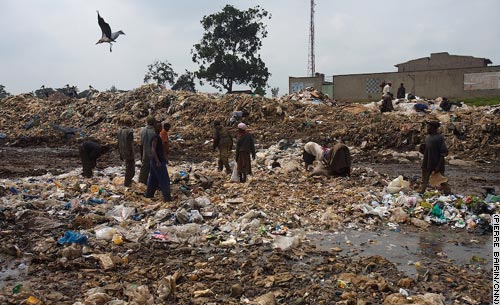
People and vultures compete over scraps in the main garbage dump of Nairobi, Kenya.


There are more than three million people in Kenya infected with HIV/AIDS, and more than two million have died of AIDS-related complications, according to Kenya's National AIDS Control Council.


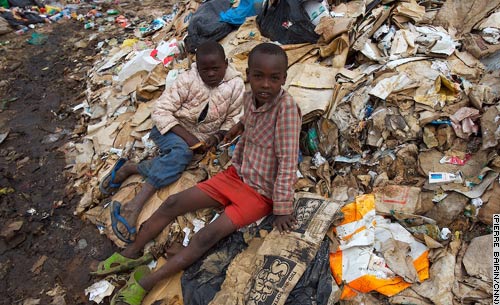
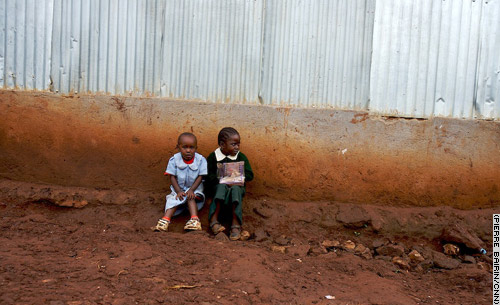
The people who live in Nairobi's slums often collect plastic bags from the dump and sell them for a few cents.


Fatma prepares food for her husband, Hussein, who is dying of AIDS, while their 11-year-old son Mukhtar watches. Fatma also is infected with AIDS.


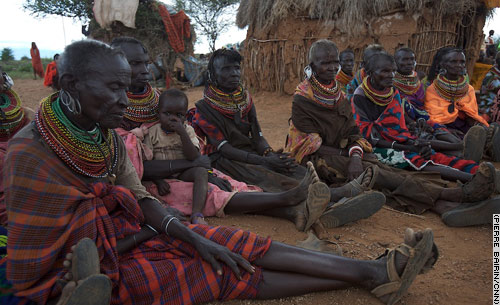
There are as many as one million AIDS orphans in Kenya, and grandmothers are often the only ones left to care for the children. The disease has destroyed even indigenous communities deep in the Kenyan countryside -- such as the Masai community shown here.


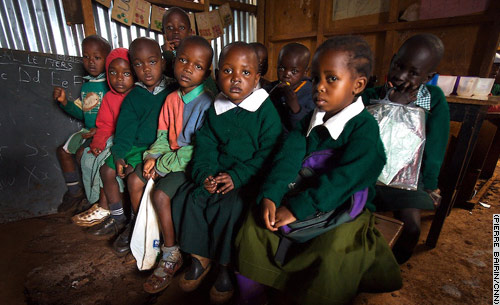
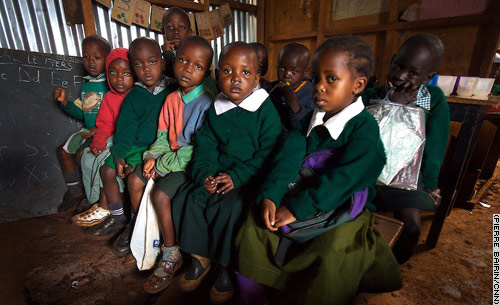
Children sit in class at the Stara Rescue School in the Kibera slum of Nairobi, Kenya. Of the 470 children in the school, approximately 70 percent are AIDS orphans.


Masai grandmothers struggle to find food for their orphaned grandchildren.


Many AIDS orphans are themselves HIV positive.

Saturday, July 22, 2006

World fails to save Africa's AIDS orphans

Via: CNN

ISIOLA, Kenya (CNN) -- AIDS invaded our consciousness 25 years ago. A whole generation around the world has now grown up knowing only a world with AIDS. We have watched the efforts to find a vaccine, to find drugs to control the disease, to educate people about preventive measures, and to end the stigma of AIDS. There have been many successes in helping adults with the disease, but when it comes to the children, the world has failed dismally.

Millions and millions of AIDS orphans are the devastating legacy of this epidemic. Africans suffer the most. According to the United Nations, there are 12 million AIDS orphans in sub-Saharan Africa alone, and in four short years that number will skyrocket to 18.4 million. That means AIDS orphans will make up 15 to 20 percent of the population in some African countries.
Traveling around the region, we met young children heading entire households, after losing one or both parents. Because the adults are missing, entire economies are collapsing. There's no one left to plant crops, tend livestock or look after the young. And AIDS is killing the children as well.
According to the United Nations, HIV infection is more aggressive in children less than 18 months old than in adults. In the absence of any treatment up to 50 percent of HIV-infected children die by their second birthday. In Africa, less than 5 percent of HIV-positive children who need treatment have access to it. And every day, another 1,800 children are infected with HIV, mostly at birth or from their mother's milk.


In Europe or America, this is almost unheard of because there is effective treatment to stop pregnant mothers from passing on the virus to their newborns. But in Africa, there is little access to this life-saving prenatal therapy. Furthermore, only 10 percent of pregnant women in Africa have access to basic treatment that could half the rate of transmission of HIV to their newborns. "It's another grotesque double standard," said Stephen Lewis, the U.N. AIDS envoy to Africa.


'It's everybody's fault'
Ninety percent of all HIV-positive children under 15 are infected mainly through mother-to-child transmission, according to UNICEF's global figures. Special pediatric AIDS drugs have only been made for children in the last two years.
We asked Dr. Chris Ouma, UNICEF's AIDS specialist in Kenya, why children have gotten such a raw deal.
"I think it's everybody's fault really," he said. "We were slow on the science. We did not speak out for them. Companies did not see the incentive to invest in drugs for children as there's no one to pay. And all this has now resulted in an unacceptable death [rate]."
He added, "I think now as technology brings out superior drugs, things are starting to change. It's 10 years too late, but at least something is being done now."
Indeed Kenya is one of the countries that has made a significant dent in AIDS prevalence and treatment. But there still is much more to do. There are currently one million AIDS orphans in Kenya alone. UNICEF reports that around the world, there are about 2.3 million children under 15 living with HIV. Two million of them live in sub-Saharan Africa, or 90 percent of the world's HIV-infected children.


Grandmothers increasingly raising orphans
Our journey took us from Isiola and the rural tribes in northern Kenya to Kibera just outside Nairobi. Kibera is the world's largest slum, where 50,000 AIDS orphans scratch out a living.
There we came across the amazing phenomenon of African grandmothers -- a whole generation of elderly women now looking after their grandchildren, after the mothers and fathers died of AIDS. Without them, these vulnerable children would be dead, or turn to a young life of crime and prostitution.
In Isiola, where Kenya's paved road to Ethiopia and Somalia ends, the incidence of HIV is almost double the national average, and it's due to the convergence of truck routes and tribal traditions. The drought and famine that recently hit this part of Kenya exacerbates the AIDS and health crises. Tribesmen told us the appalling story of sending their wives out for prostitution, in order to afford food. But along with the food, they bring AIDS back to their tribe and their village.


Motor bikes get drugs to remote areas
However, all is not bleak. In the shadow of Mount Kilimanjaro on Masai tribal lands, a team of local doctors and community health workers is bringing 21st century medical care to rural Africa. American philanthropist Anne Lurie, who is also a pediatric nurse, has planned and paid for the AID Village Clinic here, along with its sophisticated medical equipment and highly trained Kenyan doctors. For the Masai villagers, all the treatment is free.

What makes this clinic truly remarkable, though, is the outreach. Doctors don't just sit and wait for patients, they go out and find them, treat them, and make regular follow-up calls.
The outreach project is the brainchild of two British dirt bikers, Barry and Andrea Coleman, who realized that a transport network was the missing link. "The entire continent of Africa is more or less grounded when it comes to health outreach. Which is a pretty big problem when you think of the effort that goes into sending drugs, sending health care expertise and it all doesn't reach the people who need it," said Barry Coleman. Without any government help, they've sent hundreds of motor bikes to Africa's wildest places with money they've raised at bike rallies in England. They have also trained the local health workers how to drive and maintain them.
It seems to be making a difference in Africa's medical catastrophe. The Colemans have similar and bigger bike outreach projects in Gambia and Zimbabwe, and doctors there tell them that they are having an effect on reducing the disease and illnesses by getting patients much-needed medicine. He said more such programs are urgently needed: "People are just dying for absolutely no reason at all."

He told us that the project we saw in the Masai country could be replicated around Africa. With so much money being poured into AIDS research and government coffers, perhaps one solution is to seek the simple effective approach. It does work. In the heart of rural Africa, we saw one pregnant mother infected with HIV who got the right prenatal drugs and did not pass on the virus to her son. One life saved, one child saved from becoming another African AIDS orphan.

From child slave to film director

Via: The Age

Andra Jackson
July 10, 2006
THIRTEEN-YEAR-OLD internationally acclaimed children's film director Sahiful Mondal draws on his early experience of slave labour in making his latest film, The Inner Eye.
Sahiful is one of more than 500 children rescued from child labour by Swapan Mukherjee, founder of Muktaneer (meaning Open Sky), a home for destitute children in Kolkata. In Melbourne to speak to schoolchildren, the young director described The Inner Eye as a parable about indifference and cruelty."When we were hungry, the masters were eating, but they had not the eyes to see that we were hungry," said Sahiful, who was put into servitude at the age of four.

His father had died and his destitute mother, two sisters and a brother had ended up living in a roadside hut made of bamboo, plastic and leaves.
He worked nine hours, seven days a week as a dishwasher in a household where he was beaten for breaking a glass. He was "paid" a bowl of stale rice a day, which he shared with his mother.He also did back-breaking work crushing mud with a brick for which he earned the equivalent of 20 cents a day.His last job was goat herding, for which he earned two portions of stale rice a day.

"One day I couldn't find a goat and I came back and told my master and they didn't give me and my mother food for two days and I was beaten," he said.
He was seven when taken into Muktaneer. There he received four meals a day, slept in a bed and was allowed to play for the first time.

Sahiful is one of 40 boys who live at Muktaneer, the house Mr Mukherjee set up during the devastating floods of 1978 that left many homeless. Some of the children had worked as slaves, while others had been kidnapped and sold.
Mr Mukherjee is the secretary of the Centre for Communication and Development in Kolkata, which runs Muktaneer, its own school and physiotherapy centre and 65 schools in West Bengal villages.

He is in Australia to establish links with educational and medical organisations and appeal for more volunteer teachers, after the Melbourne-based Friends of Kolkata attracted 18 volunteers. It is also helping build a new English-medium school and a girls school.Sahiful's fascination with Mr Mukherjee's video camera led to the idea of boys making their own films.

His first effort, I Am — about the boys' dreams — won the Grand Prize at the 2004 International Children's Film Festival in Athens. His second film, We Are, won the festival's 2005 Grand Prize. This year, he attended the festival in Cyprus, where The Inner Eye won second prize.The bright-eyed youngster's ambition is to make films in the tradition of the great, socially insightful Indian film director Satyajit Ray to "help people".

Friday, July 14, 2006

Understanding Child Labor, Patterns, Types, and Causes

The following is a summary of the article: Understanding Child Labor, Patterns, Types, and Causes
Via: eJournal USA

Summary:
UNDERSTANDING CHILD LABOR
by: Nasir Al-Amin
In the article Understanding Child Labor, Patterns, Types and Causes, by Eric Edmonds, child labor is viewed as a facet of poverty, in which emphasis is placed on addressing a family’s inability to secure their most basic needs. This financial constraint leads destitute parents to face the “difficult decision” to either engage their children in the informal labor market or to invest in their children’s future by sending them to school. The economic contribution of children is vital to poor families living standards and their ability to cope with extreme poverty. However, a family’s decision to engage their children in child labor is not exclusively driven by a family’s impoverished state.

Furthermore, during this decision-making process, parents must also asses the value of their child’s time against the opportunities afforded the child. Parents will not opt to forego their child’s economic contribution if the alternatives to child labor are not attractive enough. Another influential factor is a families ability to access credit. Households that are able to borrow against future earnings are able to allocate these funds to schooling expenses such as textbooks, uniforms and school supplies.

The later section of this article looks at polices aimed at eliminating child labor. Vital to effective policy is that it eliminates the need for child labor, rather than simply eliminating employment options for children. Interventions that have been effective are programs that pay children a stipend for attending school. Oportunidades, one such program operating in Mexico, has assisted five million families. Essential to Oportunidades effectiveness is its ability to mitigate the impoverished family’s need for their child’s financial contribution.

Child labor is pervasive and destructive to children’s health and development, as well as their ability to break the generational transmission of poverty. Thus efforts to address their plight must be grounded in a sound understanding of the various facets of child labor and seek to redress the poverty and environmental factors that cultivate child labor.

Tuesday, June 13, 2006

Lalibela Project: Reception, Art Show and Auction

Thomas Kocsis

Founder and Director of the
Lalibela Project
cordially invites you to a Reception, Art Show and Auction

Thursday, June 15, 2006
6:00 pm to 9:00 pm
Hospital Audiences, Inc.
548 Broadway, 3rd Floor
New York, NY

Entrance Fee: $30.00
(Proceeds will benefit the Lalibela Project)

We request the favor of an RSVP
by returning the enclosed card or going to
www.lalibelaproject.org/RSVP.html


The vision of the Lalibela Project is to create possibilities for children in an environment that will spark an epidemic of empowerment resulting in extraordinary life-altering experiences. The Lalibela Project, a non-for-profit organization, aims to develop and support an orphanage center in the village of Lalibela, Ethiopia. Providing housing and education will broaden these children’s perspectives and encourage them to dream.

Monday, June 12, 2006

1 in 7 Children Worldwide Work To Survive

Via: eJournalUSA


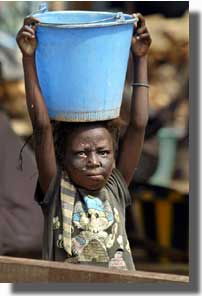
Seven-year old Catherine, her face scarred in a cooking accident, carries a bucket of water at a refugee camp in western Côte d’Ivoire. She was forced to flee her home during fighting over land on which to grow cocoa.

Text and pic provided by: Ben Curtis, AP/WWP

In pictures: Underground children (Ethiopia)

Via: BBC
The following is a dipection of street children in Addis Ababa Ethiopia, retrived from the BBC's section: In Pictures.

In hiding
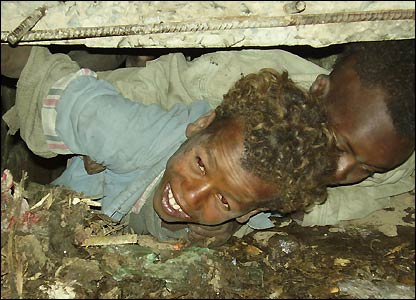
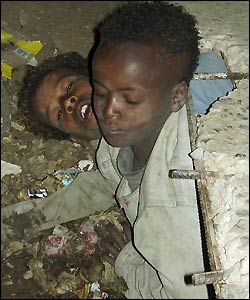
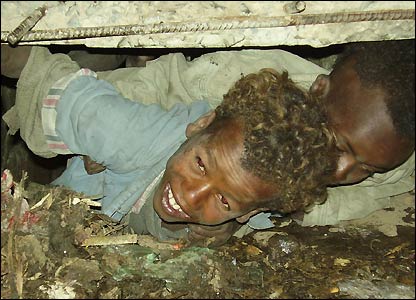
Blink and you will miss the underground children in Ethiopia's capital city. They live in tunnels, sewers and drainage holes, hidden beneath Addis Ababa's teeming streets. They move from one makeshift shelter to the next, chased away by police or the rivers of water and refuse that flow when the rains come. Growing up amidst the traffic, they learn to hustle at a young age seeking change or selling small items to drivers at traffic lights.


Hidden
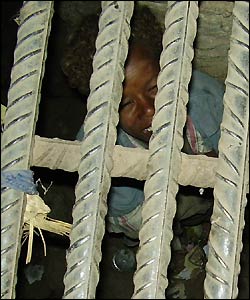
Across from the main post office, there is a sewage drain. It draws little attention. Thousands of people walk across its steel bars every day without giving it a second thought. This is good for Mohammed and his friends. They do not want their home to be discovered. The space is not more than half a metre high, and though it is five or six metres long, only one small portion is covered and unexposed. When it rains, the boys huddle together among the rubbish and waste.


Crowds
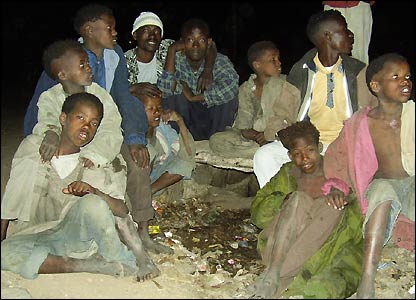
Encountering the street kids who live underground is not easy, but once we talked to a few, dozens appeared. As we walked in the shadow of the city’s main buildings, the children emerged from dark side streets and from nowhere at all. Soon we were surrounded by boys.


Hustle
For the children who have found shelter, however destitute and impermanent, the difficulties truly begin when they come up from underground and face the realities of their daily life. They must hustle for food scraps, avoid police, and beware exploitation and abuse. Many children perform odd jobs for restaurants and cafés to get bread and leftovers. Sometimes shelters will give out food, and there are soup kitchens that serve cheap meals.
Hana
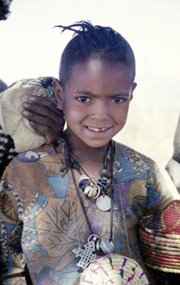
There are fewer girls but they are there. Hana, a 15 year-old, comes from Ziway, a town south of Addis. She left home and came to Addis after an incident in which she accidentally lost her family's cattle and feared her father’s rage. She hopes to return one day. "Here you don't have much to worry about," she said.
"If you get something to eat, that is good. When you don't have any, you pass the time either sleeping or chatting with friends."


Sex
When they do have money, from begging or doing odd jobs, Hana and her friends often go to the cinema. One of the girls described her attitude to sex. She said that to be safe from both pregnancy and HIV/Aids she always uses a condom. She claimed she did not face serious dangers in this regard, and said no-one had ever forced her to have sex.


Henok
Henok Tesfaye came to the streets when he was 11 years old after losing his parents in a car accident. Ten years on, he is used to life on the streets. He lives beneath a main road in an unused hole dug for telephone cables. The roof is made of concrete blocks placed side by side across a small opening. To keep rain out, Henok and his roommate spread plastic sheets underneath old windscreens. A small hole is both the door and the window to their tiny home.


Numbers
Among the reasons for the high numbers of street children in Addis Ababa are extreme poverty, hunger, violent conflict and drought in rural areas. Often, the children come without families, orphaned by disease, escaping abusive and neglectful parents, captivated by tales of wealth and opportunity in the big city. An exact number is too difficult to pin down accurately, but various estimates put the total number of street kids in Ethiopia between 60,000 and 150,000.


Dawit
As we were talking to Dawit, 12, he eyed a rubber wristband and we gave it him, but the next day it had gone. “It was stolen last night,” he said, crestfallen. “When I was sleeping, someone grabbed my neck and started choking me. They said: ‘Give it to me or I’ll take your life.’ So I gave it them.” He shrugged his shoulders and walked off with a friend down the busy street - unnoticed.


Text and pictures: Will Connor and Mesay Berhanu

Tuesday, June 06, 2006

Ethiopia: HIV Prevalence Among Women Reaches 5 Percent

Source: allAfrica
Summary by Nasir Al-Amin

ETHIOPIA SEES A RISE IN PREVALENCE AND INFECTION RATE AMONG WOMEN
Globally, Ethiopia has one of the largest populations infected with HIV. Conservative findings indicate that nearly two million people in Ethiopia are living with the virus; however, non-governmental organizations (NGOs) contend that the number is over three million—at the national level, the prevalence rate of infection is 4.4%. (allAfrica, 2006) According to the Ethiopian Ministry of Health (MoH), the country has observed a rise in the infection rate among women, as well as a rise in the HIV/AIDS prevalence rate among women, which is presently at 5%. (allAfrica, 2006) In Ethiopia, like other developing countries, women’s health and child survival are place at greater risk given the presence of both HIV/AIDS and poverty. In an effort to curtail the spread of HIV in the country, the government of Ethiopia, established a free ART initiative that since its inception in January 2005, has serviced 35,000 beneficiaries, of which 46% were females and 4% are children. (allAfrica, 2006)

In order to read the article click the link: Ethiopia: HIV Prevalence Among Women Reaches 5 %

Monday, June 05, 2006

Two in Five Children Work


Via: IRINnews
Summary by: Nasir Al-Amin

In sub-Saharan Africa, nearly 50 million children aged five to 14 are engaged in some form of child labour, contends the United Nations Labour Organization (ILO) in their report ‘The End of Child Labour: Within Reach.’ According to Yaw Ofosu, an ILO child-labour specialist, sub-Saharan Africa presents an amalgamation of both success and set-backs in the fight to end child labour: the proportion of child labourers declined from 28.8 percent to 26.4 percent, however, the absolute number of child labourers increased to 49.3 million from 48 million. Influential factors that obstructed progress are extreme poverty, high population growth, and the HIV/AIDS pandemic, maintains Ofosu.

The continent of Africa is home to 50,000 children “engaged in commercial sex and pornography, and some 120,000 children under age 18…coerced into taking up arms as child soldiers, military porters, messengers, cooks or sex slaves.”(IRIN, 2006) Thus, globally Africa has the highest rate of children engaged in laborious activities. “What is crucial is policies that help poor families send their kids to school,” said Ofosu.

Friday, June 02, 2006

"Spark the mind that will change the world."

By: Nasir Al-Amin

"I may not be able to change the world, but I guarantee that I will spark the mind that will change the world." (Tupac)

Yesterday, I had the pleasure of being a panelist at Millennium High School’s career day fair. I was pleasantly surprised as I arrived at Millennium, situated in Wall Street, I noticed some students were having a canned food drive. Engaging youth in acts of social welfare is vital to nurturing the seeds of civic responsibility. This was the aim of my presentation, to convey a message that regardless of the profession they choose, they should look to see how their career, skills, talents and creativity could be used to affect change in the world.

During one segment I inquired if any of students could guess the number of children engaged in child labor globally? I received a number of figures, with the highest being 2 hundred million. They were shocked when I informed them that there are approximately 246 million children engaged in child labor. Ultimately, any time I’m afforded the opportunity to speak, it’s really an opportunity to raise awareness about the plight of orphans and vulnerable children. In the words of Tupac:
"I may not be able to change the world, but I guarantee that I will spark the mind that will change the world."

Below are EXCERPTS from the speech I delivered:

ADVANCE OPPORTUNITY IN THE LIVES OF OTHERS, BECOME AN AGENT OF CHANGE
By Nasir Al-Amin
I’m honored to have the opportunity to speak to you today.

I am here today because:
AIDS has rendered an estimated 13 million children orphans. By 2010, approximately 25 million children will have lost one or both of their parents to AIDS.

I am here today because:
Globally an estimated 246 million children are engaged in child labor, and each year approximately 1.2 million children are trafficked, and annually“over a million children enter the sex trade.”

I am here today because:
Half a million children in Ethiopia die each year from malnutrition and disease

So my purpose is to awaken in all of you the spirit to dream, create and persevere. To encourage you all to choose a path in life that will affect change in the world. Whether it’s a domestic or international issue such as HIV/AIDS, Child Labor, Child prostitution, parity in education and the health care system, or issues of racism and discrimination, choose an issue, saturate your mind and heart with information about those adversely affected by that particular issue and strive to affect change.

This brief outline is in essence, is the blueprint to my life: a life that enjoys both ease and hardship, but respects the necessity of both. A life that is a success, as I define success—not as popular media or the norms of this society defines success. Which leads me to my second point that I want to leave you with: Define for yourself what a successful life is, and constantly reflect and redefine your definition. The point is to remain the author, the definer.

So the two salient points I want to leave you with are the following:
1. First, educate yourself about an issue you have a passion for. Then dream, create and persevere.
2. Define for yourself what a successful life looks like.

For myself, my passion is aiding orphans and vulnerable children, specifically in Ethiopia. Additionally, I define a successful life as merely the culmination of successful days and a successful day is one in which I’ve made efforts at alleviating the suffering of others.

In closing, as future agents of change, I pray that you all are successful in your endeavors and that the world will benefit from your dreams, creativity and perseverance.